
Maggie
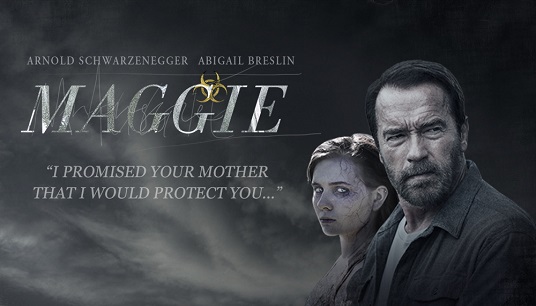
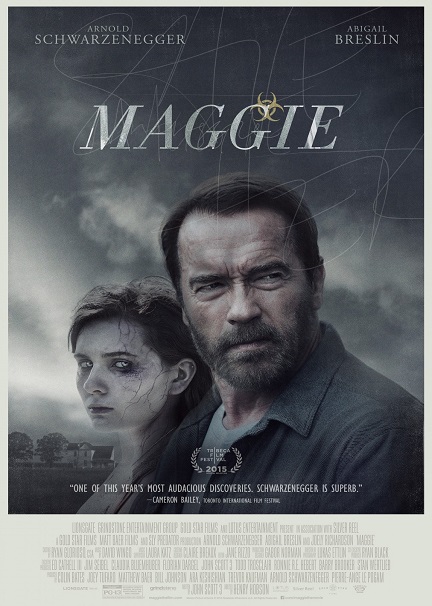
Cast of Characters:
Wade Vogel – Arnold Schwarzenegger
Maggie Vogel – Abigail Breslin
Caroline Vogel – Joely Richardson
Sheriff Ray Pierce – Douglas M. Griffin
Deputy Holt – J. D. Evermore
Trent – Bryce Romero
Allie – Raeden Greer
Director – Henry Hobson
Writer – John Scott 3
Producer – Colin Bates, Joey Tufaro, Matthew Baer, Bill Johnson, Ara Keshishian, Trevor Kaufman, Arnold Schwarzenegger & Pierre-Ange Le Pogam
Distributor – Lionsgate Films & Roadside Attractions
Running Time – 95 minutes
Rated PG-13 for disturbing thematic material including bloody images, and some language.
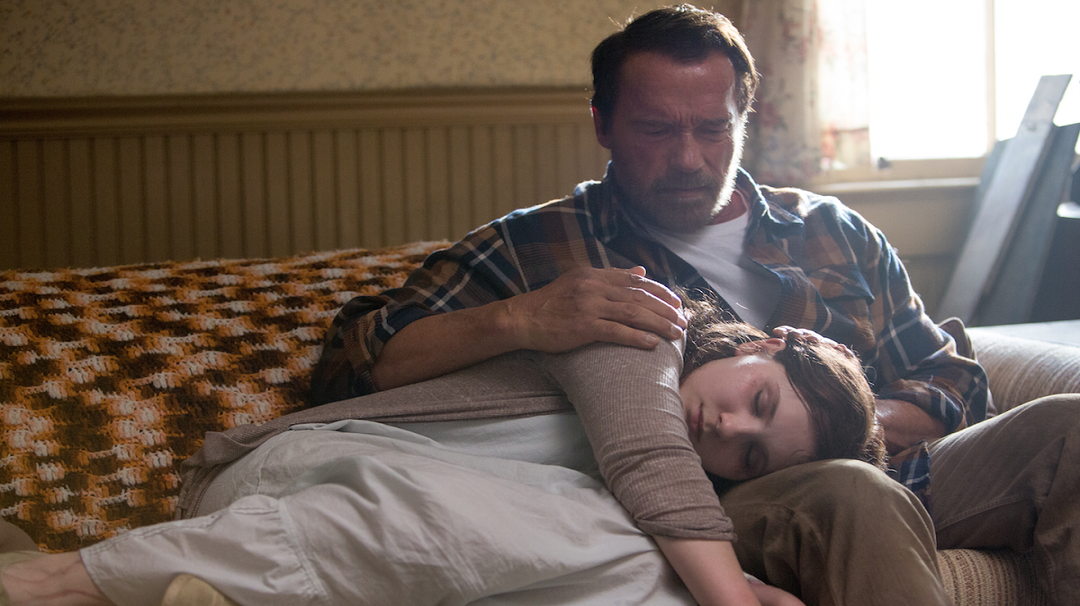
An outbreak of an unknown disease has turned those infected into cannibalistic “zombies”. After his daughter Maggie (Abigail Breslin) becomes infected, Wade Vogel (Arnold Schwarzenegger) takes her home from the hospital. Despite the doctor advising him that Maggie’s sickness will progress to a point where quarantine will become necessary, Wade hopes he can still do whatever he can to protect her. As her condition worsens, though, Wade slowly comes to the heartbreaking realization that there might not be any hope for her.
Maggie is a film that needs a big disclaimer for those expecting either a typical eat-’em-up zombie film, an explosive, action-packed Schwarzenegger vehicle, or what many Arnold fans might hope is a long-awaited combination of both.
It’s none of the above.
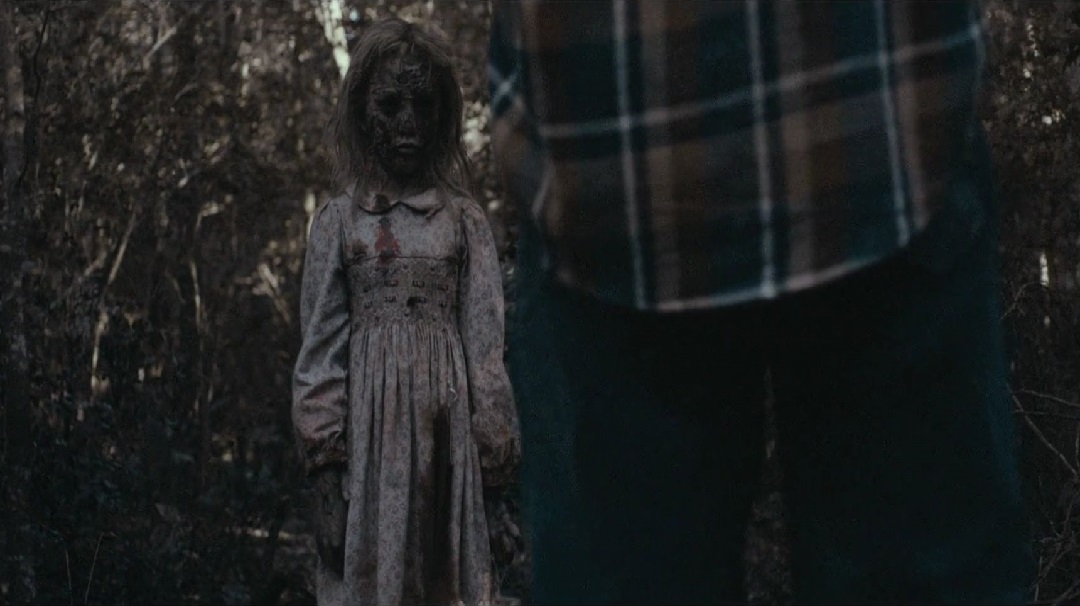
Yes, those expecting zombie blood, guts, gore and dismemberment won’t find what they’re looking for here. There are a few instances of those infected being killed off, but it’s done in a manner meant more to evoke heartbreak instead of thrills and excitement. Those expecting Schwarzenegger to open up a can of whoop-ass on the living dead won’t find what they’re looking for here either.
Yet that is exactly what I love about this film.
Imagine The Walking Dead if created by Terrence Malick. That pretty much sums up the vibe of this film.
Director Henry Hobson comes from an art and title design background, having worked on projects like Snow White and the Huntsman, The Hangover Part II, The Lone Ranger and, speaking of Terrence Malick, The Tree of Life. With Maggie, his feature film debut, Hobson wisely doesn’t swing for the fences to prove his name, nor do he and writer John Scott 3 fall prey to the number of machinations and cliches that are part and parcel with an over-saturated zombie setting that has been used as the template for ever genre you can think of, from horror, sci-fi and action to lighter fare such as satire, comedy and even rom-coms. Subtlety is the name of the game here, and it’s that slow-burn, less is more approach by Hobson that allows Maggie to stand out within the horde of zombie films.
That’s not to say Maggie is entirely ignorant of its premise. This certainly falls within the genre, and Scott provides just enough backstory to set things up; however, the zombie apocalypse here is utitlized more as a backdrop to highlight one family’s personal tragedy. Maggie is simply about a father using what little time he has left to connect with his daughter, whose infection is treated less like a monstrous transformation and more a terminal illness like cancer or any other type of degenerative, incurable disease. Anyone who has lost a love one to a terminal illness knows how indescribably difficult it is to initially accept such news. Similarly, Wade wants to belive everything will turn out all right, despite his daughter’s sickness progressing right in front of his very eyes. It’s his coming to terms with the inevitable as he struggles to either hold on to hope or finally let go that give Maggie its emotional weight.
Stylistically, Maggie paints a bleak picture right from the get-go, eschewing monster thrills for mood and atmosphere to sell a doom and gloom scenario. Hobson fully commits to the film’s grim and somber tone that is fully realized to beautiful effect by Lukas Ettlin’s suitably dreary cinematography and David Wingo’s rustic, low-key aching musical score. The relentlessly solemn vibe and deliberate pace will be trying for some, I’m sure, but it’s nevertheless crucial in ensuring the impact delivered by the story. Without it, it most likely goes nowhere.
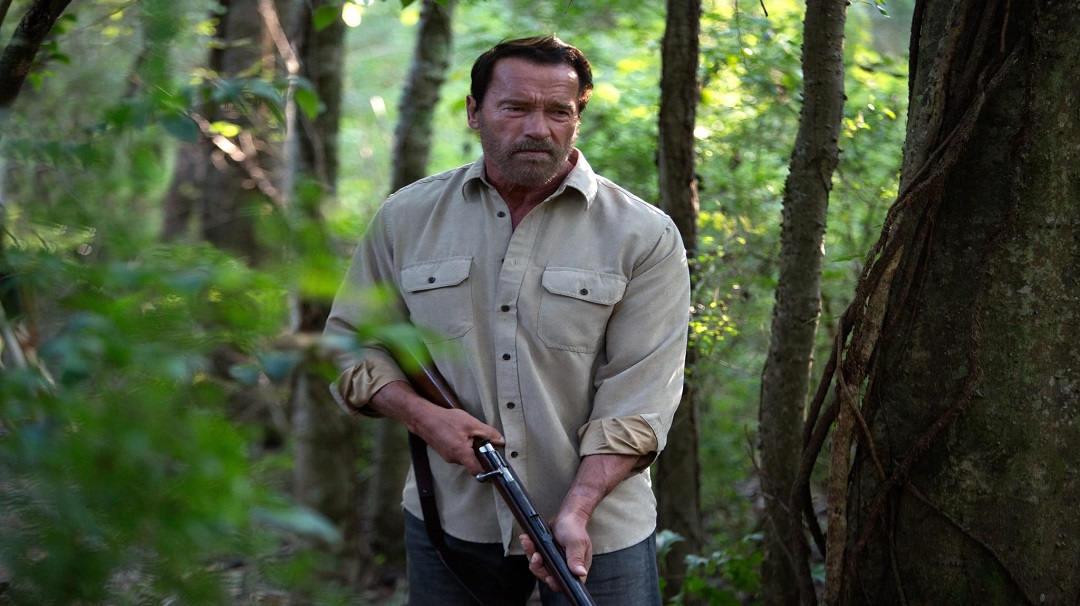
Unsurprisingly, what piqued everyone’s curiosity when this film was first announced was Schwarzenegger’s involvement. One wonders what drew him to this project (he also serves as one of the producers) and, vice verse, what Hobson and casting director Ryan Glorioso saw in him. Rarely has Schwarzenegger departed the comfort of the action genre in favor for more serious, dramatic turns. The few times he has before, it didn’t pan out so well (though following this film, he would go on to turn in another solid dramatic turn in 2017’s Aftermath). Despite being a horror film, End of Days had the Governator playing a more tortured ex-cop who lost his faith following the murder of his wife and child. Sabotage featured him trying to channel something similar to Kurt Russell’s Dark Blue and Denzel Washington’s Training Day (both of which were written by Sabotage director David Ayer).
Neither worked.
Yet while his best film still remains Terminator 2: Judgment Day, this is the most nuanced performance he’s ever given. Schwarzenegger dials down the machismo and charisma he’s banked his entire career on, delivering an understated yet emotionally charged turn that effectively conveys Wade’s vulnerability, pain and heartbreak over watching his daughter succumb to a deadly virus. No, it’s not a showy, “FOR YOUR CONSIDERATION” performance, but it doesn’t need to be either, and is ultimately a great demonstation of what Schwarzenegger can do outside his comfort zone given the right material and director.
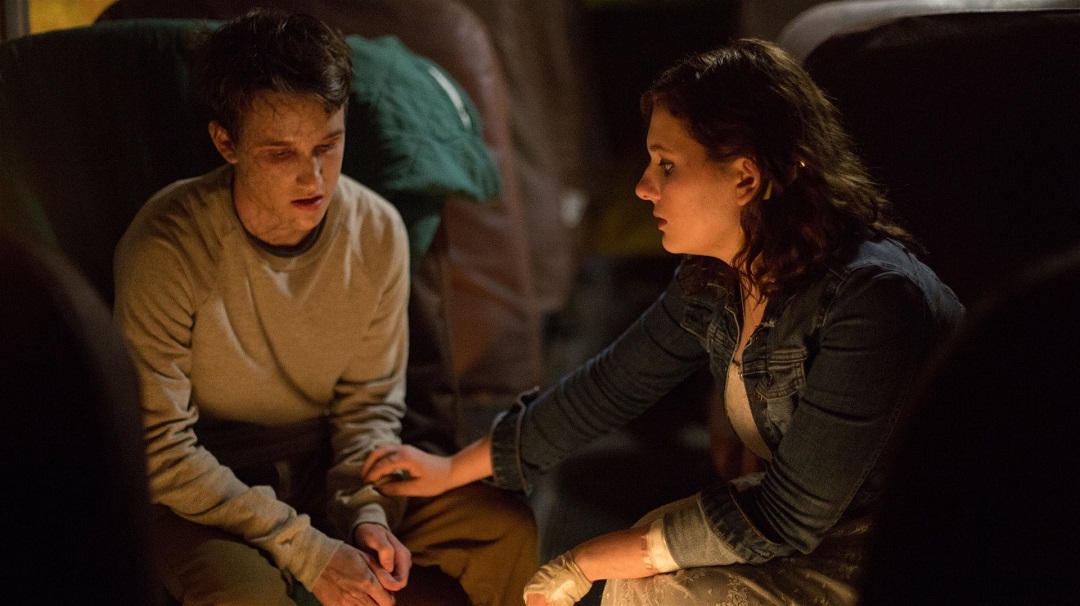
Equally strong is Academy Award nominee Abigail Breslin (who’s certainly no stranger to the zombie genre with the Zombieland horror comedies) as Wade’s eponymous daughter. Together with Schwarzenegger, Breslin gives heart-wrenching poignancy to Wade and Maggie’s relationship that captures the pain and toll her transformation takes on her family. Additionally, Breslin is required to tackle a gamut of emotions, from fear and confusion to acceptance and eventual resignation, and she handles each transition with impressive nuance.
Additionally, Joely Richardson brings dignity and grace to her role as Caroline, Maggie’s stepmother with whom she shares a strained relationship that only grows more strained as the sickness progresses. Richardson could’ve easily played Caroline as the wicked stepmother trying to connive her way in between Wade and Maggie just to add more unneeded dramatic tension by giving the film some sort of one-note, “it’s either me or her” conflict. Thankfully, she provides a far more sensitive portrayal that allows us to empathize with her justifiable concerns. Bryce Romero also shares a couple tender moments with Breslin as Trent, Maggie’s former boyfriend who’s also infected.
Unfortunately, Richardson and Romero’s efforts seem to get overlooked for the two leads, but it’s fine supporting work from them nonetheless.
Closing Statement: Fans wanting another run-of-the-mill zombie flick will largely be disappointed with Maggie. Viewers’ perceptions prior to seeing this may play a part in determining their final thoughts on the film. Those looking for something different, however, will find Henry Hobson’s directorial debut to be a small-scale but highly effective effort, one that is bolstered by Hobson’s hauntingly elegant approach and the strong performances from Abigail Breslin and Arnold Schwarzengger, the latter turning in the most pleasantly subdued work he’s given in his iconic career.
Silver Screen Fanatic’s Verdict: I give Maggie an A- (★★★½).
Benjamin’s Stash Tier: Gold Stash
About Post Author
