
The Dutchman
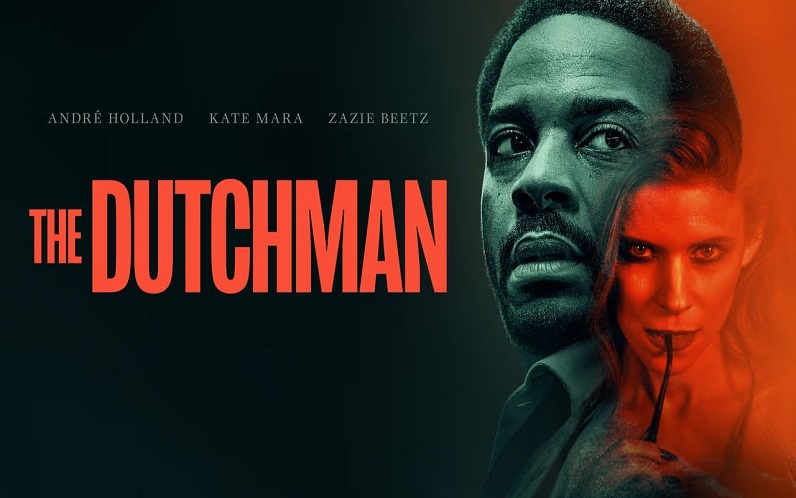
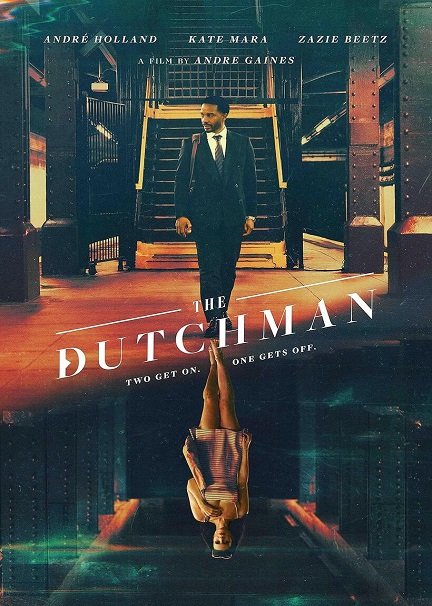
Cast of Characters:
Clay – Andre Holland
Lula – Kate Mara
Warren – Aldis Hodge
Dr. Amiri – Stephen McKinley Henderson
Gina – Lauren E. Banks
Kaya – Zazie Beetz
Director – Andre Gaines
Writer – Qasim Basir & Andre Gaines
Based on the play Dutchman by Amiri Baraka
Producer – Andre Gaines & Jonathan T. Baker
Distributor – Rogue Pictures & Inaugural Entertainment
Running Time – 88 minutes
Rated R for sexual content, language and brief violence.
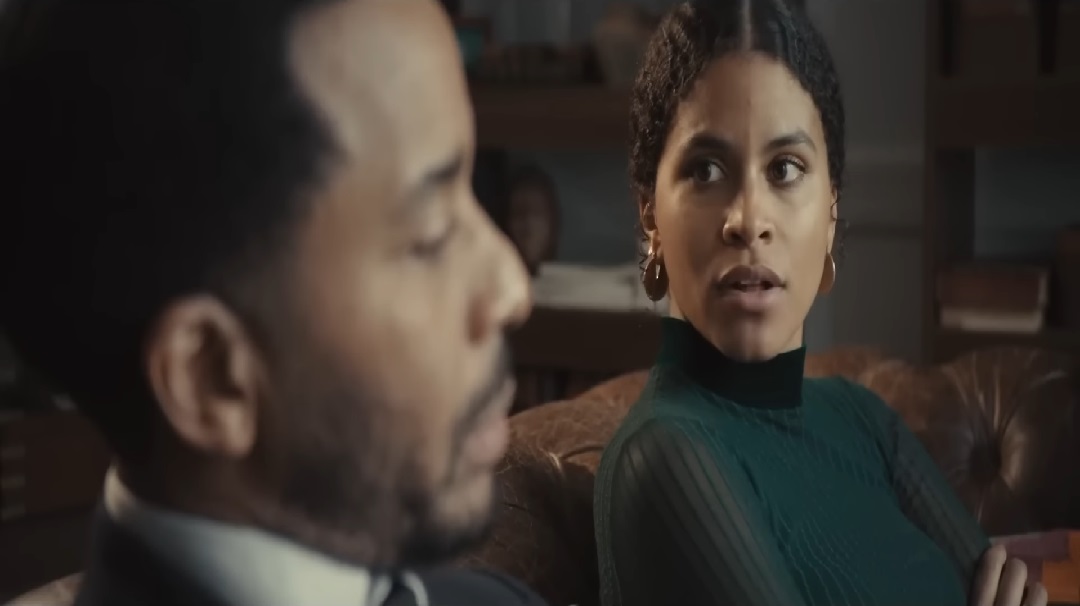
Clay (Andre Holland) is a successful black businessman currently facing troubles with his marriage. His wife Kaya (Zazie Beetz) has cheated on him, and while he chose to stay, he’s still finding it difficult to forgive her. Their therapist, Dr. Amiri (Stephen McKinley Henderson) recommends Clay read The Dutchman, a story about a black man whose life is turned upside after he has an affair with a mysterious white woman named Lula that he meets on the subway.
“Sometimes, we find pieces of ourselves in literature that help us heal. Do you see yourself on that train, Clay? Trapped between who you are and who you must be?”
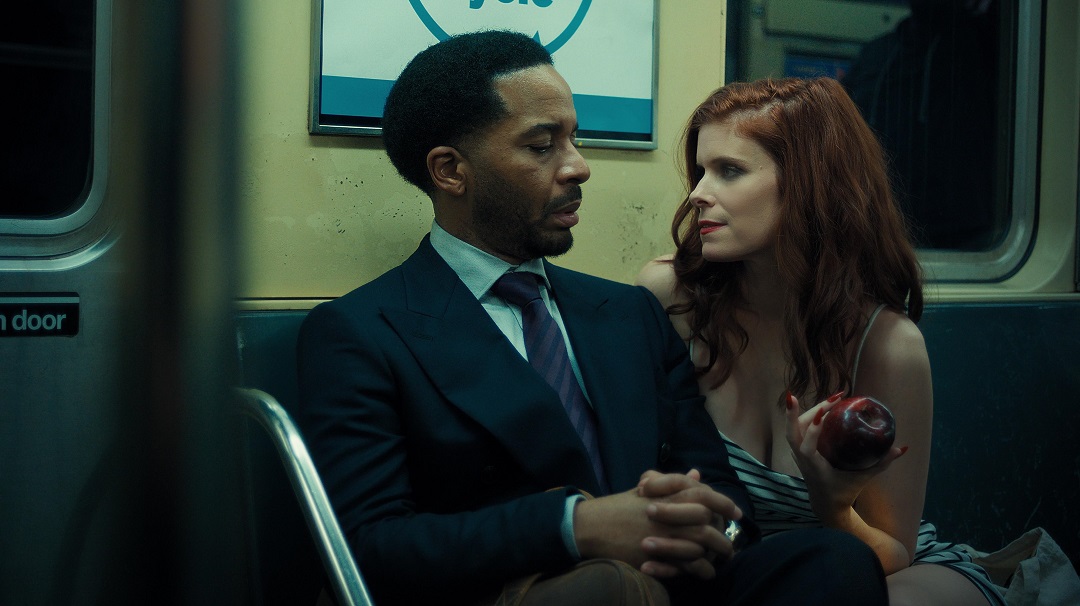
Well, wouldn’t you know it, before you can finish saying “metatextual”, Clay finds himself on a subway meeting his own mysterious Lula (Kate Mara), and to say she’s DTF would be an understatement. She’s playful, tempting and coming on like a hurricane. And she must be one hell of a firecracker too, ’cause even with her veiled racism toward Clay, he gives in to that pasty white forbidden fruit.
And to quote the Fresh Prince, “Now this is story all about how my life got flipped, turned upside down.”
Based on Amiri Baraka’s 1964 play of the same name, The Dutchman provides no context between itself and the original source material and pretty much assumes you did the homework beforehand, either by knowing the entire play front-to-back or at least looked up the CliffsNotes version on Wikipedia. So, if you’re going into this blind, and find yourself a bit lost, then brace yourself, ’cause you ain’t getting any sort of teaser or “Previously on The Dutchman….”
However, even if you’re the world’s biggest Dutchman superfan, you still might find yourself scratching your head while watching this. That’s ’cause writer/director Andre Gaines’s version, which he co-wrote with Qasim Basir, isn’t a direct adaptation. Instead, it’s a very loose and very meta adaptation where the original 1964 play exists within the world of the 2026 movie that dives head first into psychological and sometimes straight-up supernatural territory.
Got it? Makes sense?
Sometimes it pays to be ambitious, and with the right hands involved, I believe it’s better to swing for the fences than play it safe. Take 1980’s The Shining, for example. Stanley Kubrick swung so hard for the fences with his adaptation that he would’ve corkscrewed himself into the ground had he missed. Of course, Shining author Stephen King would and most definitely has argued he whiffed big time, but Kubrick’s ambition paid off wonderfully.
Alas, such is not the case for The Dutchman.
In fairness to this film, it’s certainly not coy about its meta intentions, which are made known right from the start when we meet Clay and his wife at their therapy session. Once you realize that the therapist is literally named after the author, you’ll immediately go, “Oh, I see what you’re doing, movie!” However, that approach creates a fundamental flaw for our main character. If Clay is made aware of Baraka’s story by his therapist, how does he then not realize what’s going on when said story plays itself out directly in front of him? Every detail. Every sign. Every warning. Every red flag. His white temptress is also named Lula, and yet he still falls for every trap she sets for him.
This would be like if Wesley Snipes’s character Flipper from Jungle Fever was shown the movie Jungle Fever by Spike Lee’s Cyrus, and then Flipper still went on to bang Angie.
I mean, it is Annabella Sciorra, so… just saying.
Further confounding matters is Gaines and Basir’s attempts at adding heavy-handed symbolism to an original story that already was far from subtle to begin with (Lula’s apple as a Biblical allusion to Eve, for example, also occurs in Baraka’s play). Used appropriately, symbolism can heighten and enrich your story. The Dutchman, however, appears to be a case of using symbolism for no other reason than to appear deeper than it actually is. It’s also not helped any by the hyper-literal way all the symbolism and supernatural elements are handled, which only serves to deflate any tension generated from Clay’s predicament. Why should the viewer care about stakes or consequences for Clay, if what he is going through is nothing more than a dream or some sort of supernatural event that’s detached from reality?
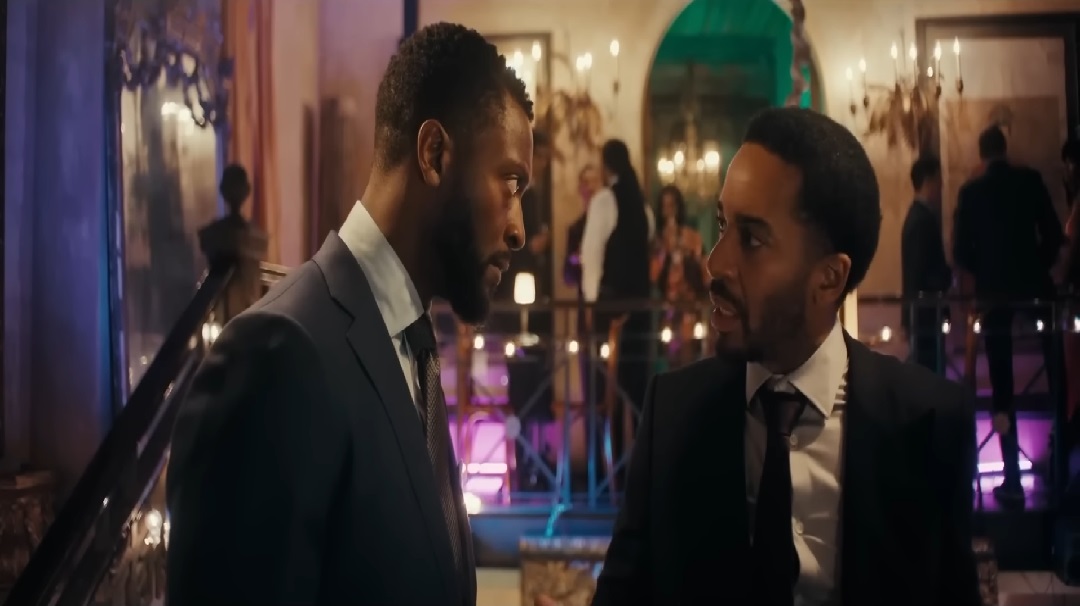
The original Dutchman already provided a wealth of substance to explore. Themes of racial tension, sexuality, identity and masculinity are great ingredients tailor-made for a compelling, thought-provoking story. It certainly was when it first released back during the Civil Rights Movement, and could still resonate greatly now sixty years later with a modern update adding more fuel to the fire with today’s technological vices (cell phones, social media, online discourse, etc.) thrown into the mix. Gaines and Basir do flirt with an intriguing idea when Clay mentions to his wife that he feels either too black in one group and not black enough in another. That comment lays the groundwork for what could’ve been a fascinating exploration of Clay’s central struggle, yet the film refuses to further explore that struggle. Not only that, later scenes seem to completely contradict it. This is particularly evident during a scene where Clay attends his friend Warren’s political fundraiser, where he’s clearly respected by the black community in attendance and even asked to give a speech on behalf of his friend. Furthermore, we never see the other side at play either, with Clay having to act white or code switch as a means of achieving his accomplishments. It’s hard to empathize with his alleged struggle when there appears to be no struggle in the first place.
At the very least, the cast is doing what they can with the limited material they’re given, namely the two leads. Andre Holland is always a welcome presence, and here he manages to pick up the script’s slack by bringing a complexity to Clay’s struggle, especially during his climactic confrontation with Lula. And speaking of that fiery temptress, Kate Mara is going for broke with her performance. It’s clear she is having a ball playing such a wicked succubus, and walks a fine line between scene-stealing vamp and cringe, eye-rolling camp.
The supporting players are a mixed bag. Aldis Hodge and Zazie Beetz have turned in great work before (Hodge in The Invisible Man and One Night in Miami…, Beetz in Deadpool 2 and Nine Days), but both are woefully underused here. Stephen McKinley Henderson fares better as Clay and Kaya’s therapist, and despite the confounding nature of whatever supernatural force his character might represent, Henderson acquits himself just fine by bringing gravitas to Dr. Amiri.
Ultimately, the cast is blameless. It’s a shame the material couldn’t match their contributions.
Closing Statement: The Dutchman features a talented cast giving it their all and a mighty ambitious swing from writer/director Andre Gaines, but ultimately misses the mark, taking Amiri Baraka’s simple yet profound story and translating it into a shallow, erratic mess that mistakes confusion for complexity.
Silver Screen Fanatic’s Verdict: I give The Dutchman a C- (★★).
About Post Author
