
The Descent
Cast of Characters:
Sarah – Shauna Macdonald
Juno – Natalie Mendoza
Beth – Alex Reid
Rebecca – Saskia Mulder
Holly – Nora-Jane Noone
Sam – MyAnna Buring
Paul – Oliver Milburn
Director – Neil Marshall
Writer – Neil Marshall
Producer – Christian Colson
Distributor – Pathe Distribution
Running Time – 100 minutes
Rated R for strong violence/gore and language.
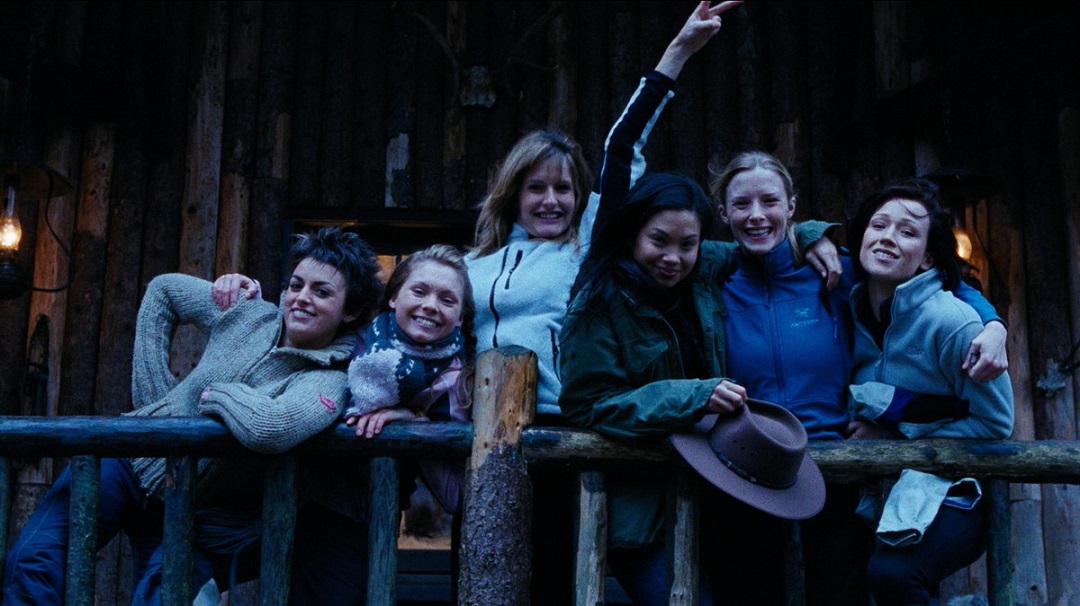
A year after suffering a tramautic event with her family, Sarah (Shauna Macdonald) reunites with her friends – Juno (Natalie Mendoza), Beth (Alex Reid), Sam (MyAnna Buring), Rebecca (Saskia Mulder) and Holly (Nora-Jane Noone) – for a vacation getaway in the Appalachian Mountains.
If the entire history of thriller and horror flicks have proven anything, it’s that your vacation spot should be smooth sailing for ya. Forget what Deliverance, The Blair Witch Project, The Mothman Prophecies, Tucker & Dale vs. Evil, Jug Face and all seven Wrong Turn films warned you about. Have fun!
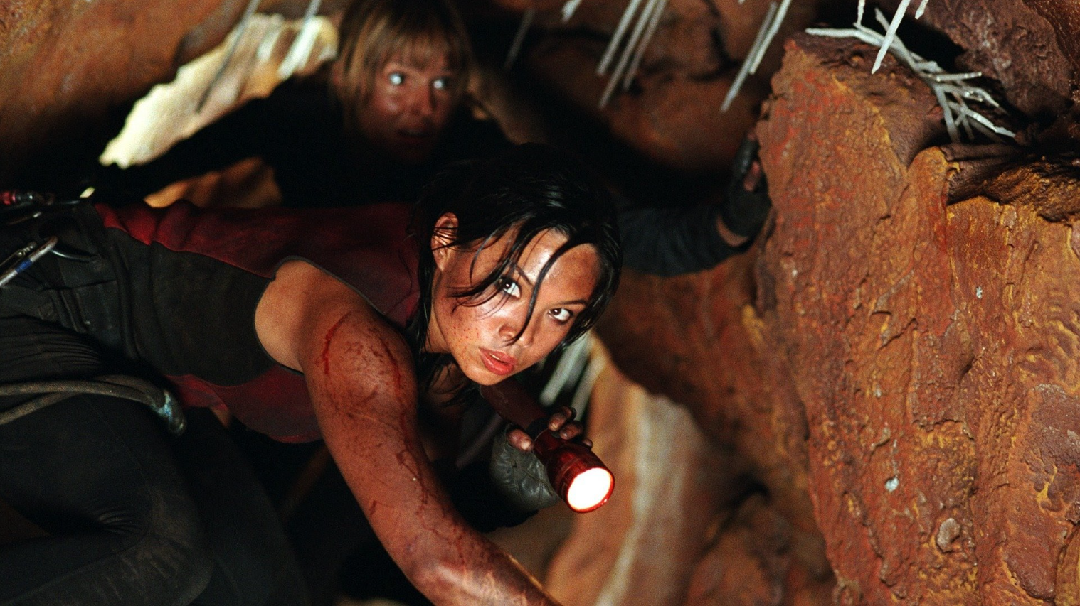
Oh, noooo. Spoke too soon. ‘Cause while on a spelunking expedition, things take a turn for the worse when a rock fall leaves them stranded in an uncharted cave with no map and only a handful of supplies to last them the rest of the trip.
Dr. Rumack just checked in to tell you all good luck. We’re all counting on you.
There’s having a film completely take you by surprise and then there’s absolutely being sucker punched like what The Descent did to me when I first saw it years back in theaters. Most of that reaction could be due to the fact that on that day I was in the mood to catch a flick, didn’t really look too much into what was playing that weekend, but noticed on Roger Ebert’s site that this film got the coveted four-star rating (it should be noted that Ebert’s editor Jim Emerson wrote the review while the late, great film critic was on leave due to surgery). Didn’t read the review yet, but just took the rating at its word and went into this film totally blind. By the halfway point, The Descent managed to earn at least five “What the fuck?!” reactions out of me, and I mean that in the best, most complimentary way possible.
Trust me, if you haven’t seen this yet, this is a perfect example of the less you know going into it, the better your initial viewing experience will be, which is why I’m going to do my best to refrain from spoilers here.
Like Jennifer Kent’s The Babadook, Veronika Franz and Severin Fiala’s Goodnight Mommy and Ari Aster’s Hereditary and Midsommar, Neil Marshall’s The Descent is a modern-day horror masterpiece that executes everything it needs to do perfectly. Granted, I’m using horror loosely for some of those films that are technically considered psychological thrillers, but let’s just go with it. And much like those films, The Descent gets better with repeated viewings. Even if the shocks may not be as shocking, it’s those little subtleties and nuances you pick up on the next watch that you may not have caught the first time that makes this film so great.
What Marshall does so well here, among other things, is the way he patiently paces the proceedings, letting the tension simmer while slowly dialing it up bit by bit over the course of an hour or so before finally letting the chaos erupt onscreen. For much of the first act, Marshall sets up his characters and puts much care in developing both themselves and their relationships to each other, which pays off greatly once things go south. It’s more than just mindless, throwaway shocks here. We’re invested in the survival of these characters, so when the shit finally hits the fan, it’s hitting you with a terrifying blow.
While The Descent does indulge in some jump scares here and there, Marshall wisely relies more on mood and ratcheted tension to unnerve his viewers. With the aid of Simon Bowles’s exquisitely haunting production design, Marshall had an entire underground cave structure created on set at Pinewood Studios in London, and the result is nothing short of spectacular. Scott McCurdy’s excellent cinematography takes full advantage of all the set’s nooks and crannies and, with some assistance from Marshall’s choice to go with natural lighting in order to recreate a more organic cave-like atmosphere, creates a sense of isolation and claustrophobia that feels absolutely palpable.
It’s a testament to Marshall’s craft as a filmmaker and the first-rate work provided by his crew that our nails our dug deep into our armrests and our stomachs turned into knots long before the horror gets cranked up to eleven.
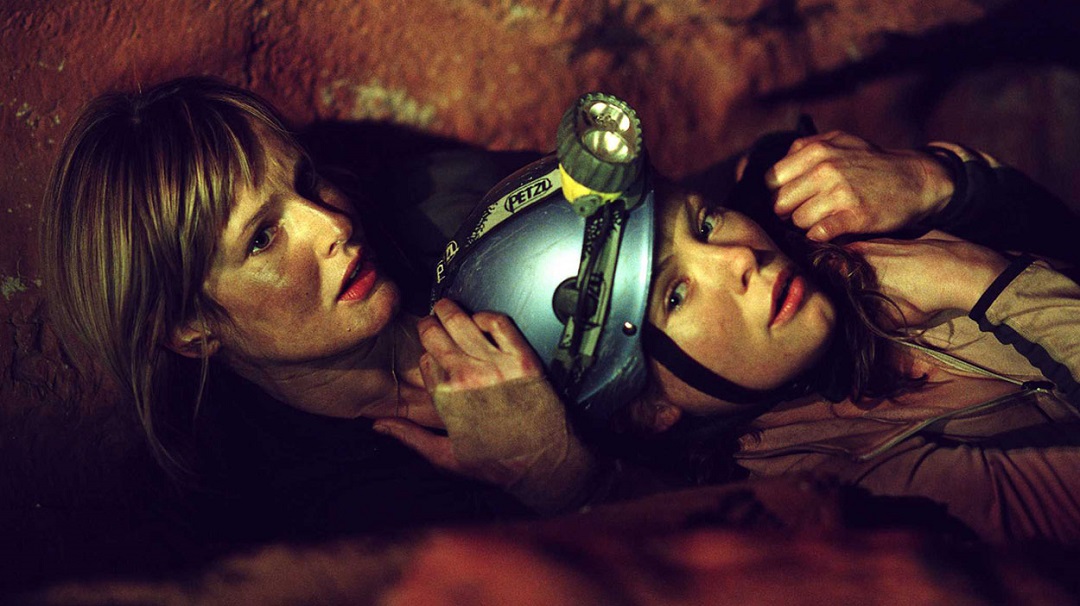
Though not a star-studded lot, the film benefits from six talented character actresses all turning in terrific work, some of which is quite physically demanding. At first glance, you might be given the impression that you’re once again seeing a bunch of stock horror archtypes (the punk, the educated one, the sweet/gentle one, the tough chick, the silent one with the past, etc.), but Marshall doesn’t lean too heavily into those types, and it’s thanks to the actresses’ wonderfully organic sense of camaraderie that they’re able to create relationships that feel authentic and fully realized.
Out of the six women, it’s by far Shauna Macdonald’s Sarah and Natalie Mendoza’s Juno that provide the film’s most complicated relationship. To avoid spoilers, I can’t go too in depth as to why that is, but there’s a genuine tension between the two that is subtly telegraphed during the opening scenes before slowly peeling back more and more fractures over the course of the film. That’s when The Descent transcends conventional horror and transforms into something actually quite brilliant. Much like how The Babadook explores themes of grief and depression, this film too examines the abject despair one can feel when trapped by an emotionally crippling monster such as depression, and how they choose to overcome it.
As Sarah’s BFF Beth tells her, “The worst thing that could have happened to you has already happened, and you’re still here.”
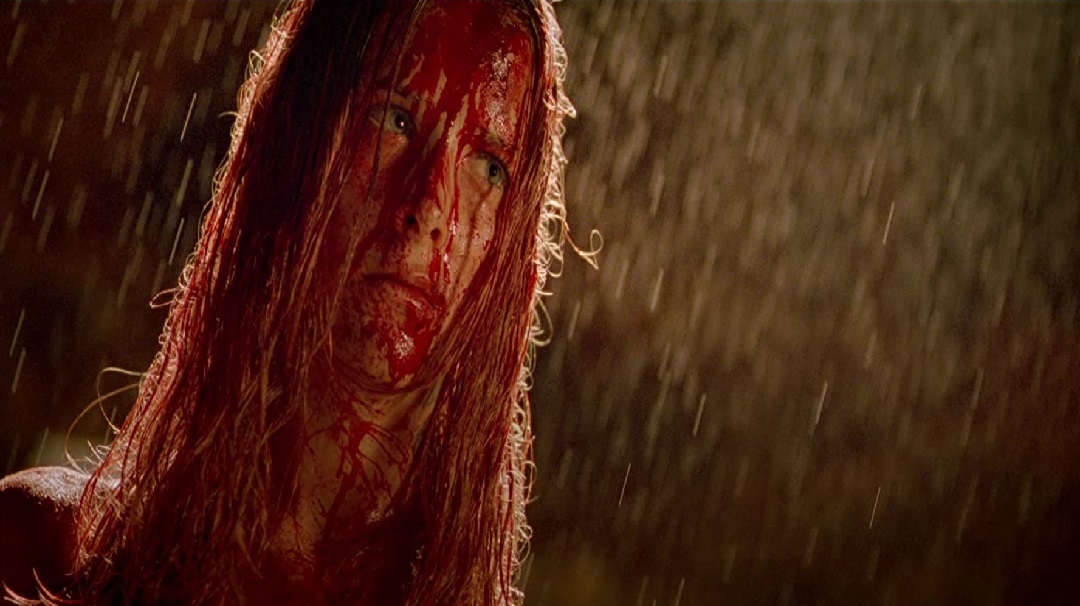
Sure, you can scoff at the title for perhaps being a little too on the nose with its double meaning, but what I love most about Marshall’s approach to Juno and Sarah is the way he implies key revelations to their relationship. He respects the intelligence of his audience by never spelling things out for them (as much as I love M. Night Shyamalan, he’s notoriously guilty of doing that even in his best work), using visual cues and subtle dialogue instead to further Juno and Sarah’s arc. It’s a multi-layered case of “show, don’t tell” that adds so much depth to this film.
Do yourself a favor, by the way, and watch the unrated cut. The American theatrical version cut out the final scene, and like most Americanized versions, opted for a mainstream ending that closes with a cliche gotcha jump scare. The unrated ending, however, provides a far better conclusion to the story that is incredibly bleak and, in a way, hauntingly poetic. No, it’s not the safe, happy ending us infantile, thumbsucking Americans prefer, but its the ending the film needs, one that pays off Sarah’s arc in a satisfying, albeit emotionally gut-wrenching, manner.
And fuck you, The Descent: Part 2, for coming along and shitting all over it.
Closing Statement: Deftly directed and superbly acted, The Descent is a stunning achievement in horror that combines extremely taut, deliberate pacing and white-knuckle claustrophobic tension with genre-pleasing horror jolts and blood-spewing thrills. But while Neil Marshall certainly delivers the thrills and chills, it’s the film’s exploration of grief, depression and eventual acceptance that truly makes this a harrowing experience.
Silver Screen Fanatic’s Verdict: I give The Descent an A+ (★★★★).
Benjamin’s Stash Tier: Diamond Stash